NIC engineering students come first and second in Food and Farming Hackathon
Published 11:55 am Tuesday, March 10, 2026
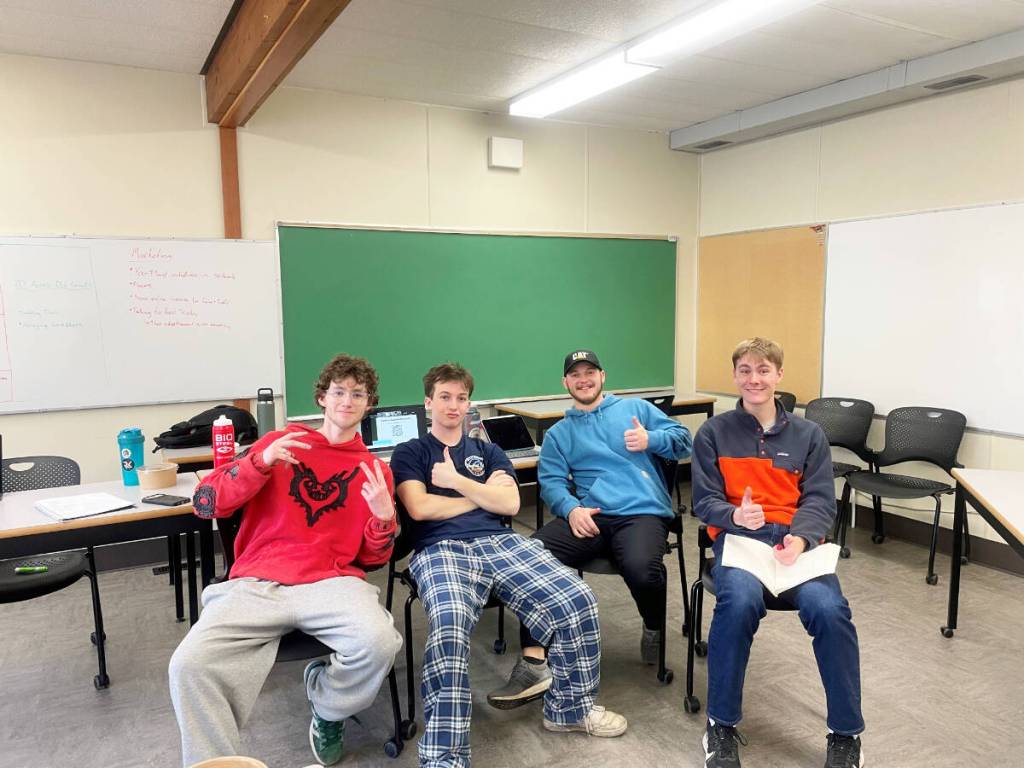


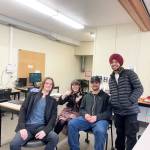

North Island College’s (NIC) two teams of engineering students finished first and second in a “hackathon” focusing on food and farming challenges.
NIC found out about the Food and Farming Hackathon in the middle of February and entered two teams. The first-place team, the Bulldozers, were comprised of Connor Gallagher (captain), Joel Baker, Tyson Bonnier and Justin Shepherd. The second-place team was WestCoast BestCoast, captained by Fallon Hayter, with members Austin Salt, Spencer Vallintine and Ryaan Kalaar.
The event was organized by the Canadian Agricultural Human Resource Council, along with STEM Minds and Boreal Farms. The Hackathon took place on March 3 from 7 a.m. to 1 p.m. The two teams took part in the Villager M building at the Comox Valley campus, where they competed virtually against students from across Canada, using their skills to solve real-world infrastructure problems.
WestCoast BestCoast designed a system for vertical farming to grow food in places like an apartment.
“During the Food and Farming Hackathon, we realized that simply giving a topic your full attention for a few hours can really grow your perspective,” said Hayter. “We opted to design a hydroponic system, but we needed a way to stand out in the current market … This design, made in a time crunch, needed every team member working in harmony for success, allowing our ideas to bounce around and become their strongest versions.”
The winning team, the Bulldozers, looked at the scenario from a different point of view. They tried to make an inherited farm profitable by using methods such as developing rentable greenhouse spaces to provide a scalable revenue stream.
“One thing that contributed to our success was that we didn’t try to reinvent the wheel,” Gallagher said. “Instead of changing what the farm grows, we focused on strengthening the systems already in place and making them more efficient and resilient.”
The students on both teams are enrolled in the college’s Engineering Foundations Certificate course. Once completed, they will transfer during their second year to the University of Victoria, the University of British Columbia, or another engineering program at a university across Canada.
NIC instructor Dennis Lightfoot says the two teams were successful because of their ability to collaborate. Lightfoot was a guiding hand during the hackathon, along with Nicole Novak, a co-operative education employment services advisor.
“The strength of both teams was really teamwork. I saw all four people on each team engaged,” Lightfoot said. “When they got the results, they were ecstatic.”
Lightfoot said the students said the college should participate in the event next year.